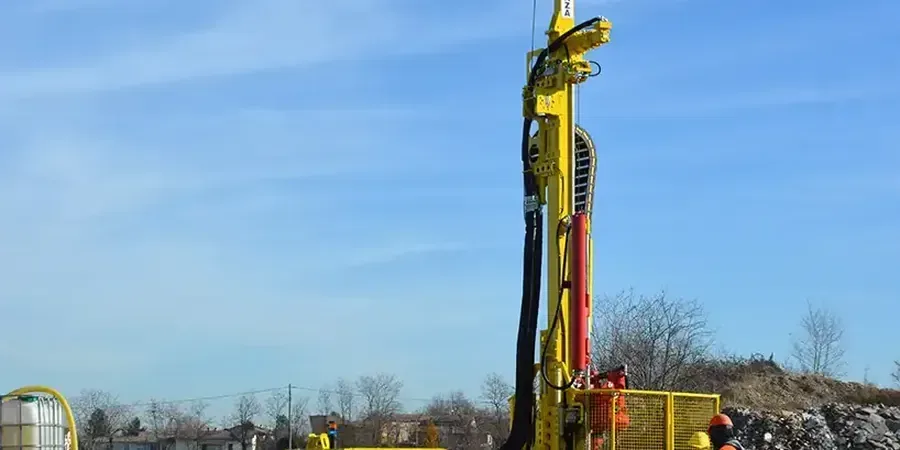
A common mistake we see on the Sunshine Coast is builders skipping a proper SPT before designing shallow footings. The coastal geology here is deceptive – one lot might have firm sands at 3 m, while the neighbour's block hits soft clay at the same depth. Without the blow count record from a Standard Penetration Test, you are essentially guessing the bearing layer. We have seen slab-on-ground projects crack within two years because the N-values were assumed, not measured. That is why our team insists on running the SPT to at least refusal depth, correlating the N1,60 values with local database records before issuing any foundation recommendation. The same approach applies when we combine it with a density test with sand cone to verify compaction on site.
Without the blow count record from a Standard Penetration Test, you are essentially guessing the bearing layer beneath your Sunshine Coast project.
Scope of work
We run the SPT using a 63.5 kg automatic trip hammer with a 760 mm drop, mounted on a tripod rig that fits tight residential blocks across the Sunshine Coast. The split-spoon sampler is driven in three successive 150 mm increments, and we record the blow count for each 150 mm segment. Only the last two increments sum to the N-value – that is a detail many crews get wrong. We log every test in accordance with AS 1726, noting soil type, moisture, and any gravel interference. For sites near the Maroochy River where groundwater is shallow, we also run a permeability test in the field right after the SPT to capture the hydraulic conductivity at the same depth interval.
Technical reference image — Sunshine Coast
Area-specific notes
What we see most often on the Sunshine Coast is the false sense of security from one single SPT hole. The geology here is variable – dune sands near the coast, residual soils inland, and occasional alluvial pockets along the creeks. One test might show N=30 at 4 m, but a second hole 10 m away hits N=6 at the same depth. That kind of variability can destroy a uniform raft foundation design. The real risk is trusting a single data point. We always recommend a minimum of three SPT locations per residential lot, and for commercial sites we tie the results into a proper geotechnical model before signing off on any bearing capacity value.
We retrieve undisturbed and disturbed samples from every test depth, logging soil type, moisture content, and visual classification on site. This service is ideal when you need both N-values and laboratory index properties for foundation design.
02
SPT with Down-Hole Seismic Velocity
We add a geophone string to the SPT rod string to measure P-wave and S-wave velocities at each test depth. This gives you shear modulus (Gmax) and site class data for dynamic analysis and earthquake loading – increasingly requested by Sunshine Coast council for medium-rise projects.
Standards used
AS 1726-2017 Geotechnical Site Investigations, AS 4678-2002 Earth Retaining Structures, AS 1289.6.3.1 Standard Test Method for SPT
Quick answers
How deep does an SPT need to go on the Sunshine Coast?
We typically drill to 12-15 m depth, or until we record five consecutive 150 mm intervals with N-values above 50 (refusal). In the coastal sand deposits near Coolum, refusal is often reached at 8-10 m, while inland residual soils near Nambour may require deeper probing to 15 m to find competent bearing strata.
What is the difference between N-SPT and corrected N1,60?
The raw N-value is the sum of blows for the last 300 mm of penetration. The corrected N1,60 applies an energy ratio correction (ERi) and an overburden correction (Cn) to normalise the blow count to a standard effective stress of 100 kPa. This corrected value is what we use in bearing capacity and liquefaction assessment, because it removes the effect of depth and rod energy variation.
Do you offer SPT testing on weekends or after hours?
Yes, we can schedule weekend and after-hours SPT testing for projects on the Sunshine Coast that need to avoid traffic disruption or noise restrictions. Our crews are NATA-accredited and carry all necessary insurances. The standard rate applies, with a small surcharge for weekend work. Contact us for a quote specific to your site.
How much does a Standard Penetration Test cost on the Sunshine Coast?
The typical cost for an SPT on the Sunshine Coast ranges from AU$950 to AU$1,180 per test, including mobilisation within 20 km of Maroochydore. This covers the drilling, sampling, on-site logging, and a preliminary N-value report within 48 hours. The final cost depends on depth, number of tests, and site access conditions. We provide a fixed-price quote before mobilisation.