Together, we solve the challenges of tomorrow.
READ MORE →Geotechnical investigation on the Sunshine Coast forms the essential foundation for safe, compliant, and durable construction across this rapidly developing region. Encompassing a suite of field and laboratory techniques — from exploratory test pit excavation to in-situ strength testing — these investigations assess subsurface conditions to inform foundation design, earthworks, and risk management. Without thorough site characterisation, projects face heightened risks of structural distress, slope instability, or groundwater-related defects that can prove costly and dangerous over the long term.
The Sunshine Coast's geology presents a complex and varied profile that directly shapes investigation requirements. Much of the coastal plain is underlain by Quaternary alluvial and estuarine deposits, including soft clays, loose sands, and organic silts prone to settlement and liquefaction. Inland areas and hinterland slopes transition into residual soils derived from weathered metasediments and intrusive rocks of the Gympie Province, where colluvial creep and boulder floaters demand careful logging. The region also features lateritic duricrusts and reactive clay pockets that influence footing performance. Understanding this geological mosaic is why systematic subsurface data collection matters.
Australian Standards govern geotechnical practice nationally, and Sunshine Coast projects must align with AS 1726 for site investigation terminology and reporting, AS 2870 for residential slabs and footings on reactive soils, and AS 3798 for earthworks control. Queensland-specific guidance from the Department of Transport and Main Roads additionally applies to public infrastructure, while local council development codes may stipulate minimum borehole depths and investigation scopes for slope hazard assessments, retaining structures, and stormwater infiltration systems. Adherence to these norms ensures regulatory sign-off and professional indemnity coverage.
The range of projects demanding formal investigation is broad. Residential builders on sloping allotments or fill platforms rely on SPT (Standard Penetration Test) data to confirm bearing capacity and identify soft layers before finalising footing designs. Medium-rise commercial developments and industrial sheds require deeper boreholes to characterise strength variability and groundwater levels, while infrastructure such as roads, bridges, and sewerage networks mandates comprehensive corridor studies. Even smaller-scale works like pool excavations, retaining walls, and stormwater detention basins benefit from targeted testing to avoid unexpected ground conditions.
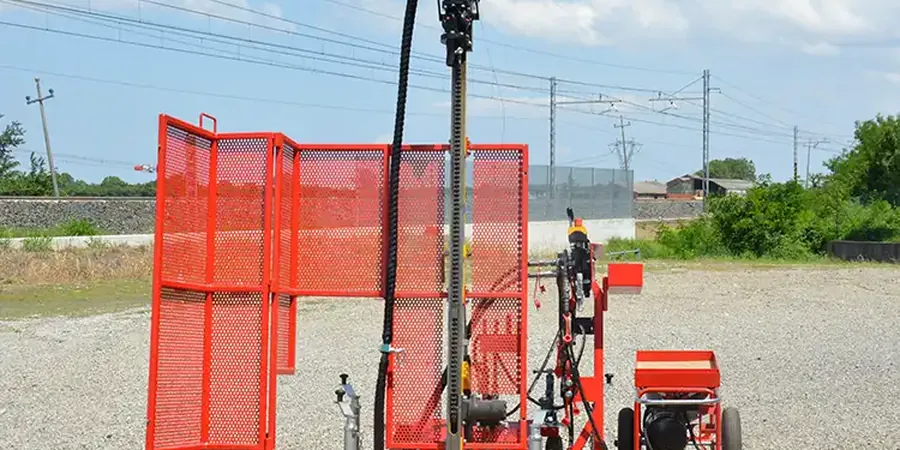
It generally includes a desktop study of geology and site history, followed by intrusive fieldwork such as boreholes, test pits, or dynamic penetrometers. Laboratory testing on recovered samples determines strength, compressibility, and reactivity. Results are compiled into a factual or interpretive report addressing bearing capacity, settlement, slope stability, and groundwater, tailored to the proposed development's specific requirements.
Investigations are effectively mandatory for most developments requiring building approval or development consent, particularly on sites with slopes exceeding 15%, known fill, or reactive soils. Council codes, AS 2870, and Queensland's planning provisions typically demand site classification and foundation recommendations. Infrastructure projects under state authority must also comply with TMR geotechnical standards.
Depth depends on the structure type and geological context. Residential footings often require bores to 2.0–3.5 metres per AS 2870, while commercial buildings may need 10–20 metres to assess deeper strata and groundwater. Infrastructure or deep excavation projects can require 30 metres or more, ensuring all stress-influenced zones and potential failure surfaces are adequately characterised.
Skipping investigation can lead to foundation distress from unexpected soft soils, differential settlement on variable fill, or slab heave from reactive clays. Slope instability, retaining wall failure, and groundwater ingress are common consequences. Rectification costs often far exceed the initial investigation budget, and non-compliance with Australian Standards may void insurance and create legal liability.
We serve projects across Sunshine Coast.