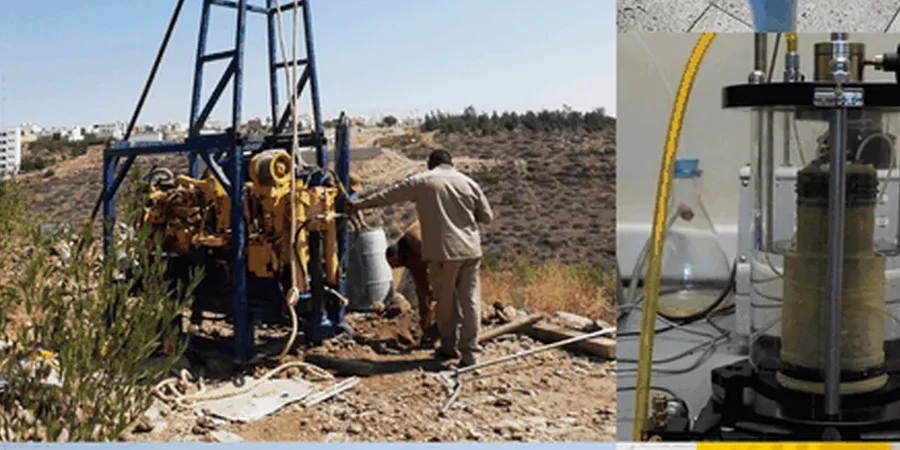
We recently worked on a three-storey townhouse development near Buddina, where the site had deep, loose sands overlying an older clay layer. That mix forced us to plan the soil mechanics study carefully, because standard boreholes alone would not capture the variability. By combining a series of test pits with a permeability test at the water table, we mapped the horizon that controlled both bearing capacity and drainage. For Sunshine Coast, where coastal sands and estuarine silts alternate unpredictably, a thorough soil mechanics study is the only way to avoid surprises during excavation.
Coastal sands and hinterland clays demand different testing; a single approach misses half the ground truth.
Scope of work
The contrast between the volcanic-derived soils of the hinterland near Mapleton and the sandy coastal plain around Maroochydore is striking. In the hills, residual clay profiles up to 8 m thick require attention to shrink-swell behaviour; near the coast, loose to medium dense sands call for assessment of liquefaction potential under seismic loading. Our soil mechanics study in Sunshine Coast addresses both extremes: we run Atterberg limits and consolidation tests on the clays, and for the sands we perform SPT with energy calibration. When a project straddles the two zones, we recommend a MASW survey to image the stratigraphy without drilling every 20 m. This approach keeps costs predictable while delivering the data engineers need to design foundations that match the actual ground.
Technical reference image — Sunshine Coast
Area-specific notes
Sunshine Coast sits in a moderate seismic zone, but the real risk for most sites is the shallow water table. During the wet season — typically December to March — the water level can rise within a metre of the surface, turning loose sands into a challenge for excavation and compaction. A soil mechanics study that ignores seasonal fluctuation will misrepresent bearing conditions. We always extend the boring programme into the wet period or use standpipe piezometers to record the range. That data lets us advise on dewatering needs and footing depths that keep the structure safe through the whole year.
We walk the site with the project engineer, identify access constraints, and position boreholes to capture the geological variability typical of coastal sites.
02
Standard Penetration Testing (SPT)
Performed in accordance with AS 1726, with energy measurement and automatic hammer to deliver consistent N-values for bearing capacity and liquefaction assessment.
03
Laboratory classification and strength tests
Atterberg limits, particle size distribution, and triaxial compression on undisturbed samples to define soil behaviour under expected loads.
04
Geotechnical interpretation and reporting
A concise report with borehole logs, cross-sections, foundation recommendations, and slope stability checks where the site has more than 3 m of relief.
Standards used
AS 1726-2017 (Geotechnical site investigations), AS 4678-2002 (Earth-retaining structures), AS/NZS 1170.2:2021 (Structural design actions — wind, earthquake)
Quick answers
How much does a soil mechanics study cost in Sunshine Coast?
For a standard residential block with three to five boreholes, the cost typically ranges between AU$5,420 and AU$7,380. Larger commercial lots or sites with difficult access may exceed this range. We always provide a fixed quote after a quick site review.
What is the difference between a soil mechanics study and a simple borehole log?
A borehole log records the soil profile at one point. A soil mechanics study interprets those logs together with laboratory tests to deliver bearing capacities, settlement estimates, and foundation recommendations. It is the complete engineering assessment, not just a description of the strata.
When do I need a soil mechanics study for a house in Sunshine Coast?
Any new home, extension over two storeys, or a slab that spans more than 15 m in length requires a study under the National Construction Code. Even single-storey slabs on reactive clay or loose sand benefit from the study to avoid differential settlement.
How long does the study take from site visit to report?
We usually complete the fieldwork in one to two days, then spend another five to seven working days on laboratory testing and reporting. Total turnaround is typically two weeks. Urgent projects can be prioritised with an additional mobilisation fee.
Does the study cover slope stability for properties on the Sunshine Coast hinterland?
Yes. If the site has a natural slope greater than 10° or is within 30 m of a known landslide area, we include limit-equilibrium analysis using Bishop's method. The report will state the factor of safety and recommend retaining walls or drainage if needed.