Many builders in Sunshine Coast assume the sandy topsoil is uniform across the region, only to hit unexpected fill, old creek beds, or buried debris when excavating for footings. That assumption can cost weeks in redesign and thousands in remedial work. An exploratory test pit gives you a direct look at the soil profile before you commit to a foundation design. We dig a controlled pit with an excavator, log the stratigraphy, and take undisturbed samples for lab testing. This step is essential for residential slabs, retaining walls, and any structure where the ground might hide surprises. Complementing the test pit with a study of SPT helps correlate penetration resistance with visual logs, giving you a more reliable bearing capacity estimate.
A single test pit in Sunshine Coast can reveal buried creek deposits or old fill that no desktop study would ever catch.
Scope of work
We use a 5-tonne tracked excavator to dig test pits up to 4.5 metres deep, depending on groundwater and site access. The equipment is compact enough for tight backyards in Buderim or Maroochydore but powerful enough to cut through the dense sands of the coastal dune systems. Each pit is logged in accordance with AS 1726, describing soil type, colour, moisture, and consistency at every 0.3-metre interval. We record any signs of groundwater seepage, collapse, or obstructions. Undisturbed block samples are taken from key layers for moisture content, density, and classification tests back at the lab. For deeper investigations on sloping blocks, we integrate the findings with a stability analysis of slopes to evaluate landslide risk before excavation begins.
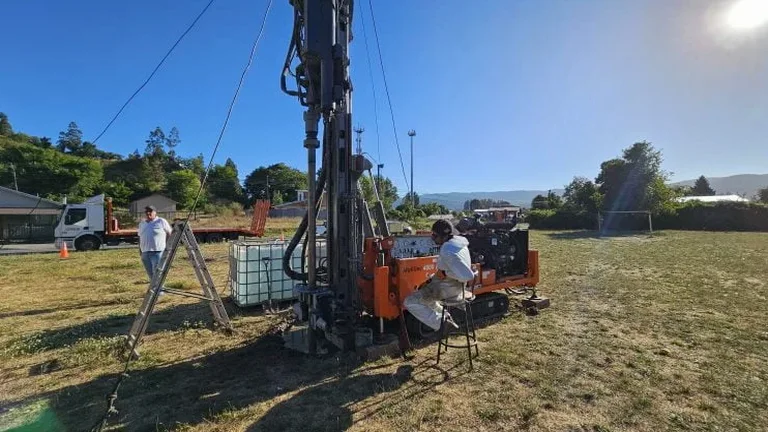
Technical reference image — Sunshine Coast
Area-specific notes
Sunshine Coast expanded rapidly from the 1980s, with many estates built over former pineapple farms, wetlands, and sand dunes. The original topsoil was often pushed into low-lying areas, creating variable fill layers up to 2 metres thick. A test pit is the only reliable way to map these man-made deposits. If you miss a pocket of uncompacted fill under a slab, differential settlement can crack your floor within 12 months. We have seen houses on Nicklin Way where the front half sits on natural sand and the back half on loose fill from the 1990s. A targeted test pit campaign would have flagged that risk before the slab was poured.
Single pit with full logging, block sampling, and visual classification. Includes moisture content and density tests on key strata. Ideal for residential slabs and small commercial pads.
02
Test Pit + Laboratory Suite
Extended scope with Atterberg limits, sieve analysis, and shrinkage index on selected samples. Recommended for retaining wall designs and sites with suspected reactive clays.
Standards used
AS 1726:2017 – Geotechnical site investigations, AS 4678:2002 – Earth-retaining structures (relevant for pit stability), AS 1726 – Description and identification of soils (visual-manual procedure)
Quick answers
How deep can an exploratory test pit go in Sunshine Coast?
Most pits reach 3.0 to 4.5 metres, limited by groundwater and pit wall stability. In the coastal strip, the water table often appears at 2.5 metres, so deeper investigation may require a borehole. We always assess collapse risk before entering the pit.
What is the typical cost range for a test pit on the Sunshine Coast?
The price for a single exploratory test pit with logging and basic lab tests is between AU$830 and AU$1,280. The final cost depends on depth, site access, and the number of samples required. We provide a fixed quote after a quick site review.
When should I use a test pit instead of a borehole?
Use a test pit when you need to see the soil structure directly – for example, to identify fill layers, buried debris, or shallow groundwater. Boreholes are better for deep investigations or when you need continuous SPT profiles. In Sunshine Coast, test pits are the go-to for residential work and shallow foundations.